
T.O. 126: Gaza: Make the Break! NGOs Lash Out at Israel; Russia Antiwar; Canada Strikes; Blocking Arms Shipments to Israel
The Organizer Newspaper
T.O. No. 126 – December 31, 2023
http://www.socialistorganizer@gmail.com
– – – – – – – – – – – – – – – – – – –
IN THIS ISSUE
• GAZA UPDATE: Dare to Make the Break! – by The Editors
• PALESTINE: NGOs, Media and Institutions Accuse the State of Israel and Its U.S. Sponsors — Press Review
• RUSSIA: “Bring my husband home … I’ve had enough of this!” — from our correspondents
• CANADA: Strikes and a Simmering General Strike in Quebec’s Public Sector
• OPEN FORUM: “Dockworkers and Labor Activists Can Block the Transport of Arms to Israel”
* * * * * * * * * * *
Gaza Update: Dare to Make the Break!
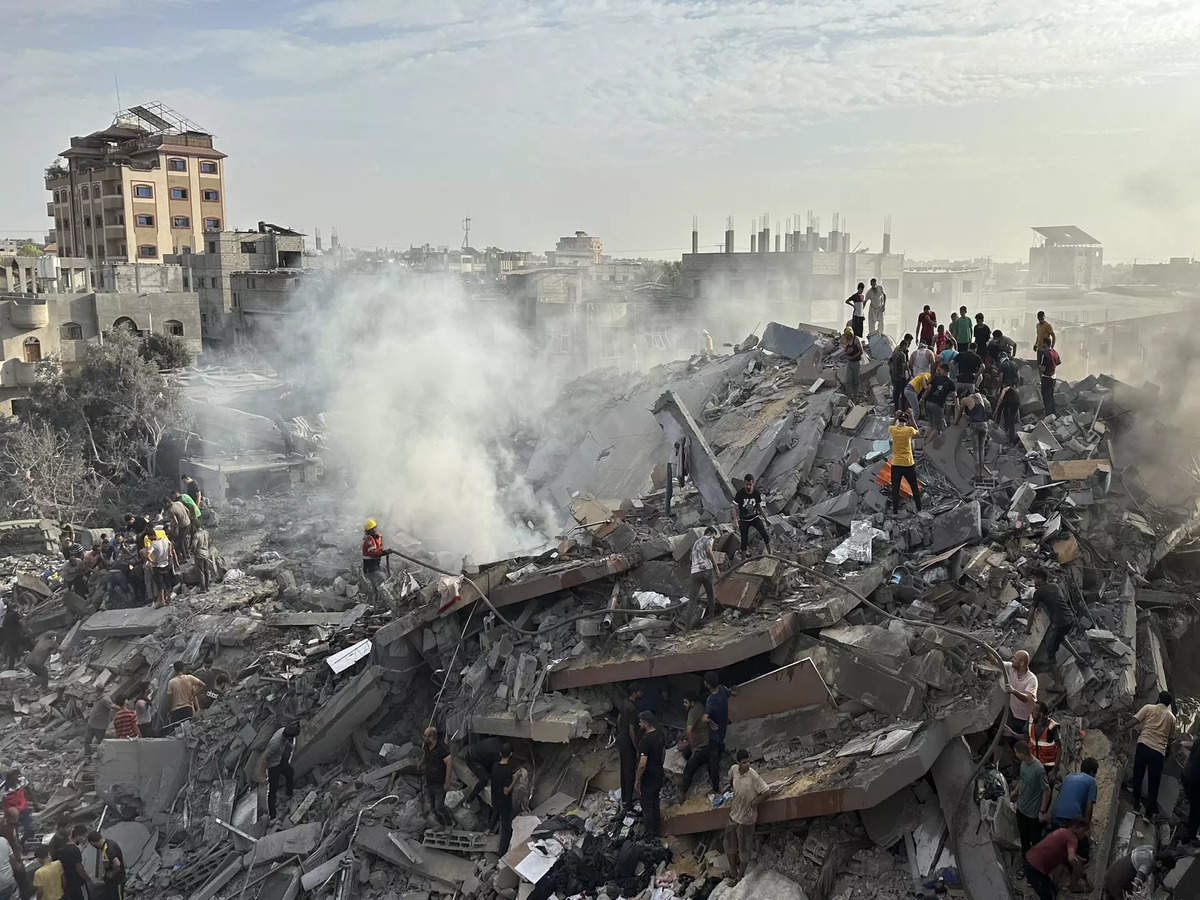
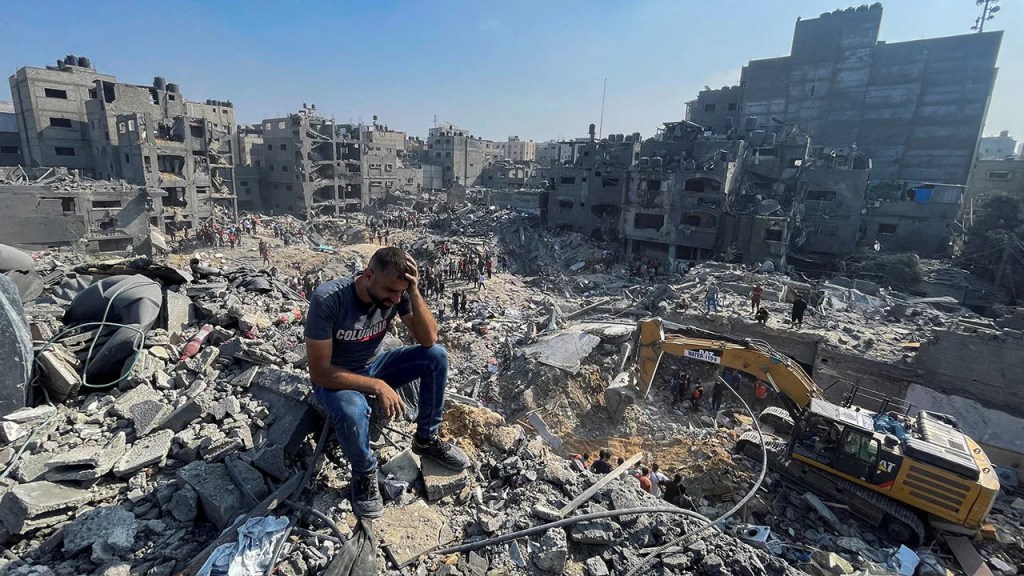
The situation in Gaza is “apocalyptic” for the civilian population. So says Josep Borrell, Vice-President of the European Commission and head of its diplomatic service, who adds: “The destruction of buildings in Gaza is more or less or even greater than the destruction suffered by the German cities during the Second World War.” For his part, the UN Secretary-General describes Gaza as “a children’s cemetery.”
Nearly 2.5 million trapped Palestinians are staggering under the apocalypse of more than 10,000 Israeli strikes that sow death at every turn; almost 80,000 killed or wounded*; widespread famine, the sick no longer being cared for, and 85 percent of the population displaced.
After Borrell condemned the apocalypse, what was the response of the Foreign Ministers of the 27 countries of the European Union who met with him on December 11? On the proposal of several countries, they called for additional sanctions against Hamas.
Sanctions? If the aim is to stop the “apocalyptic” onslaught that is devastating Gaza, they must target those responsible. Namely, Israel and the Netanyahu government, but also the United States and the Biden administration, which – through its military, financial, political and diplomatic support – bears an overwhelming responsibility for the situation.
For anyone who cares about humankind, the most urgent thing – whatever their point of view on Hamas or the political solution in the Middle East – is for the Palestinian children to be able to live, be fed and be cared for.
The urgent priority is to stop the murderous onslaught.
At the UN Security Council on December 8, the United States blocked the call for a ceasefire. This proves two things. First: Nothing can be expected from the UN which, for 75 years, has remained faithful to its 1947 Resolution, the one that imposed the partition of Palestine, the cause of the suffering that has been inflicted on all the inhabitants of the region ever since. Second: The broad consensus around the slogan of a “ceasefire” is misleading, to say the least.
Yes, we must demand an end to the firepower unleashed by Israel on the Palestinian population! But we must also demand that that Israeli troops withdraw from the Gaza Strip and that the siege be lifted, so that resources can be assembled to feed, care for and save the population! In addition, working-class organizations should call on workers to block arms shipments to Israel and to mobilize to put an end to the military and financial aid given to Israel by the United States and all the capitalist powers!
As we do so, it becomes imperative to dare to break with the Democratic Party. It is not just Joe Biden — “the genocide president” — but the institution of the Democratic Party which for 75 years has provided unconditional support for the Israeli government and its apocalyptic assault against the Palestinian people.
Dare to break with the imperialist order, in this arena of struggle as in all others.
It is only the unity of workers and peoples that can bring peace to the world.
Dare to break: what more you can do …
Sign and distribute widely Labor Fightback Network’s “Call for union leadership to demand an end to the support of arms to Israel.” https://laborfightback.net/2023/12/19/call-for-union-leadership-to-demand-an-end-to-the-support-of-arms-to-israel/
Become involved with Labor and Community for an Independent Party (LCIP) and its efforts to create the building blocks for a working-class party rooted in labor and oppressed communities. Save the date: February 11, 2024 for an upcoming LCIP national zoom forum.
Subscribe to “The Organizer” https://socialistorganizer.org/ and contact us at theorganizer@earthlink.net to learn how you can become a member of Socialist Organizer.
Endnote
*As of December 30, 21,672 Palestinians have been killed and 56,165 wounded, although the number of killed can be expected to be higher since it has not been possible to extract bodies from the rubble.
* * * * * * * * * * *

PALESTINE
NGOs, Media and Institutions Accuse the State of Israel and Its U.S. Sponsors
Press Review
Despite more than two months of intense official propaganda, it is now difficult to hide the reality of the genocide of the Palestinian people. Many NGOs, media and institutions – some of them traditionally pro-Israel – are now being forced to acknowledge the reality, and to accuse the State of Israel and its U.S. sponsors.
Leo Cans, head of mission in Gaza for Doctors Without Borders (DWB), asserts:
“We are bombing a civilian population in a disproportionate and indiscriminate manner. We can see this in the nature of the injuries sustained by the patients arriving at our hospitals, more than half of whom are women and children … .
“We are currently working in two hospitals in Gaza: In the last 24 hours, at the Al-Aqsa hospital, we have received more dead than wounded. And every day we descend a little further into horror, into nightmare” (FIR, December 8).
This was reinforced by Dr. Rik Peppercorn, the representative of the UN World Health Organization for Gaza and the West Bank who described the conditions in Gaza’s hospitals as worse than anything he had seen in Afghanistan during the decades of U.S.-NATO war. “There’s an enormous level of amputation, including among children, spinal injuries, burns,” he said. (New York Times, December 27)
For Avril Benoît, executive director of DWB, the main culprit is the United States, which is “complicit in the massacre” by continuing “to provide political and financial support to Israel — support that is enabling the military operations despite heavy civilian casualties.”
The same observation was made this time by an eminent diplomat from the French Ministry of Foreign Affairs, Yves Aubin de La Messuzière: “Joe Biden runs the risk of being associated with a genocidal policy” (L’Humanité, December 10). “Genocidal”: How could it be otherwise when the UN World Food Program acknowledges that “nine out of ten households in Gaza go days and nights without food, some for ten days last month.
“We’re going to die here because of hunger,” is the cry of alarm from Bisan Owda, a young journalist from Gaza. (France Info, December 11). Not an exaggeration by far. A quarter of the population is starving already reported Philippe Lazzarini, head of UNRWA, the UN agency for Palestinian refugees. (The Associated Press, December 30)
If not death from bombing or starvation, then surely death from disease. The UN has reported that most available water is polluted and the sanitation system has broken down. Illnesses are rampant — rashes, respiratory problems, diarrhea and other intestinal diseases, extreme dehydration affecting the kidneys, and an explosion in the number of cases of hepatitis A cases anticipated in the weeks to come.
Even more unusual than the reports of the catastrophic situation for the Palestinian people is this editorial in French newspaper Le Monde (December 9), which directly attacks the State of Israel and the United States. By its veto at the Security Council, “the United States, isolated, has ensured that the punishment inflicted by Israel on an entire population will continue. Their humanity will have to wait.”
As for the State of Israel, Le Monde points out: “The right to defend oneself has become the right to destroy everything. The balance sheet … is there for all to see: death everywhere, hospitals in agony, destitution and the wandering of hundreds of thousands of Palestinians driven like cattle by Israeli injunctions from one part of Gaza to another, then to a third.”
Le Monde, that “institution” of the world order, concludes:
“That Israel is losing itself in this war is, alas, no surprise, so much so that it is the reflection of its own deviation … . While the bombs it supplies to Israel continue to plough Gaza without sparing civilians, can Washington believe that this sowing of iron bombs can produce anything in this bloody land other than inextinguishable hatred?”
* * * * * * * * * * *
RUSSIA
“Bring my husband home … I’ve had enough of this!”
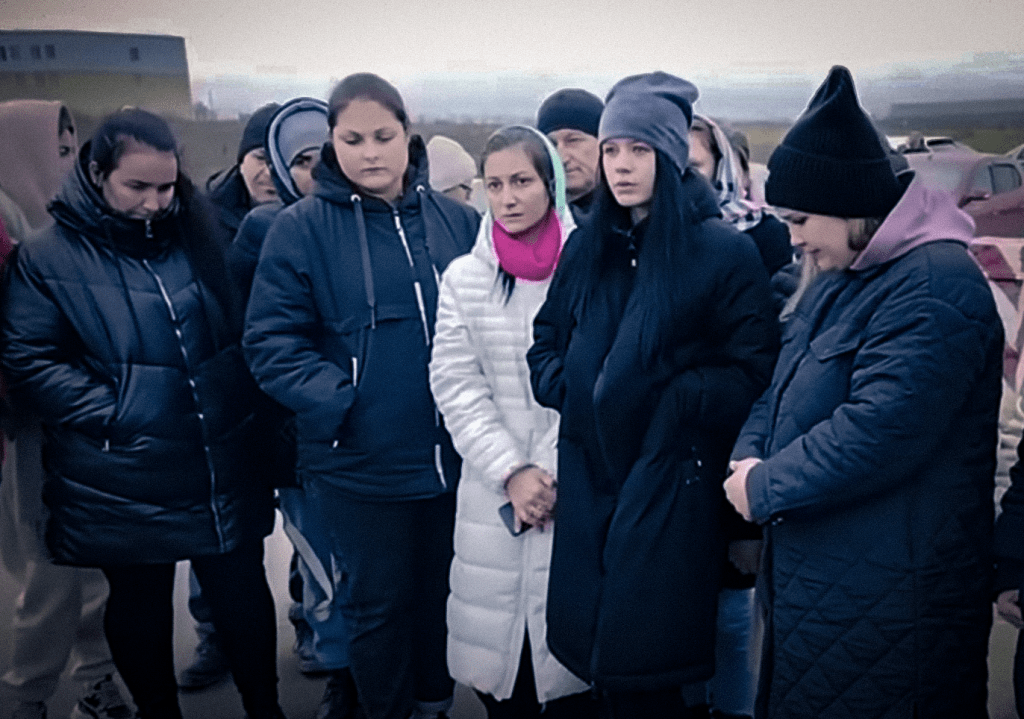
“Bring my husband home… I’ve had enough of this!” The slogan is everywhere: on the back windows of cars, on social networks. The wives, mothers and sisters of more than 300,000 workers and young people want the men brought home. The men were mobilized in September 2022 and sent to the front. Many of them have already seen their loved ones returned in grim zinc military body bags, with hasty burials by the authorities, banned from media coverage.
In Moscow on November 7, they showed up with their signs at the demonstration of the traditional “Communist” Party whose leaders – who support the war – allowed the police to take them away.
In Novosibirsk on November 19, a women’s assembly met under tight police surveillance. It adopted an eight-point resolution:
“1. The duration of service must not exceed one year. 2. Rotation of units in the combat zone at least three months apart. 3. At least one month’s leave every six months. 4. Medical assistance to soldiers in civilian hospitals. 5. Demobilization of seriously or moderately wounded soldiers. 6. Extension of the list of illnesses for which mobilized soldiers must be exempted. 7. No return to the front of wounded combatants before complete recovery. 8. Independent medical commissions to assess soldiers’ state of health.”
A local labor activist, who supports the women’s mobilization, notes:
“Although the organizers were keen to make it clear that these women are ‘patriots’, that they are not ‘against the special military operation’ [the official name of the war in Ukraine – ed. Note], they are getting in the way of the authorities. In her speech, one of the organizers – the mother of a mobilized young man – denounced the ‘bestial attitude’ of officers against soldiers who are treated ‘like slaves’, and that seriously wounded soldiers have been sent back into combat. Some are calling only for a ‘rotation’ of mobilized soldiers, while others are more skeptical about the war itself. But they could very quickly become radicalized.”
This is already happening. Another group of women – calling themselves “The Way Home” – are circulating an “Address to the People of Russia” on their Telegram channel, proclaiming:
“We are being betrayed and exterminated by our own. … We all remember that the president promised that reservists would not be called up, that only professionals would take part in the special military operation. And yet, they took our loved ones to Ukraine. The promises turned out to be hollow. Many will never return. Mobilization turned out to be a terrible mistake. We have been punished for obeying the law. Our men are paying for ‘stability’ with their blood, and we are paying with our tears. … We will not stop until our men return home safe and sound. Here and now, we form the solidarity base of the whole of society against endless mobilization.”
– Report from our correspondents
* * * * * * * * * *

CANADA
Strikes and a Simmering General Strike in Quebec’s Public Sector
The current wave of public service strikes in the province of Quebec is unprecedented in the history of Canada’s labor movement.
It affects 87 % of the province’s 650,000 public service workers in the health, social services and education sectors. The strike, decided by 95 % of union members and supported by the population, is demanding improved working conditions and a 20 % pay rise over three years, after more than a year of fruitless negotiations on the future collective bargaining agreement.
The CSN, CSQ, FTQ and APTS unions, as part of a common front, called a three-day walkout from November 21 to 23, with demonstrations. They have announced a new strike from December 8 to 14, already joined by the FIQ healthcare workers’ union (80,000 members), but from December 11 to 14. Meanwhile, the Fédération Autonome de l’Enseignement (FAE, 65,000 members) has called an unlimited general strike from November 23.
The provincial government won’t go beyond a 10.3 % wage increase over five years. But it is concerned that “the unions have threatened … to call an unlimited general strike in 2024 if no agreement is reached by Christmas“.
Because Quebec civil servants, like all workers in Canada, know that the provincial and federal governments are handing out billions of dollars to the bosses under the pretext of “stabilizing the economy” and also the war in Ukraine.
So one question arises among the strikers: to win all the demands, why not call all the unions, together, for an unlimited general strike?
— From our correspondents in Canada
* * * * * * * * * *
OPEN FORUM
END U.S. MILITARY AID TO APARTHEID ISRAEL CAMPAIGN!
“Dockworkers and Labor Activists Can Block the Transport of Arms to Israel”
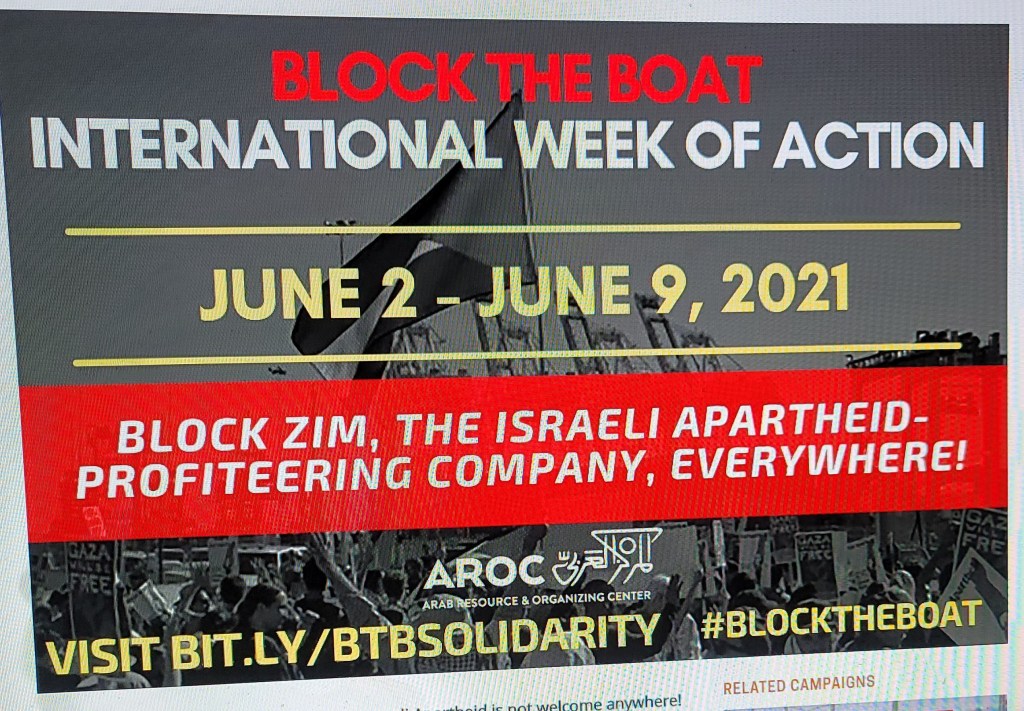
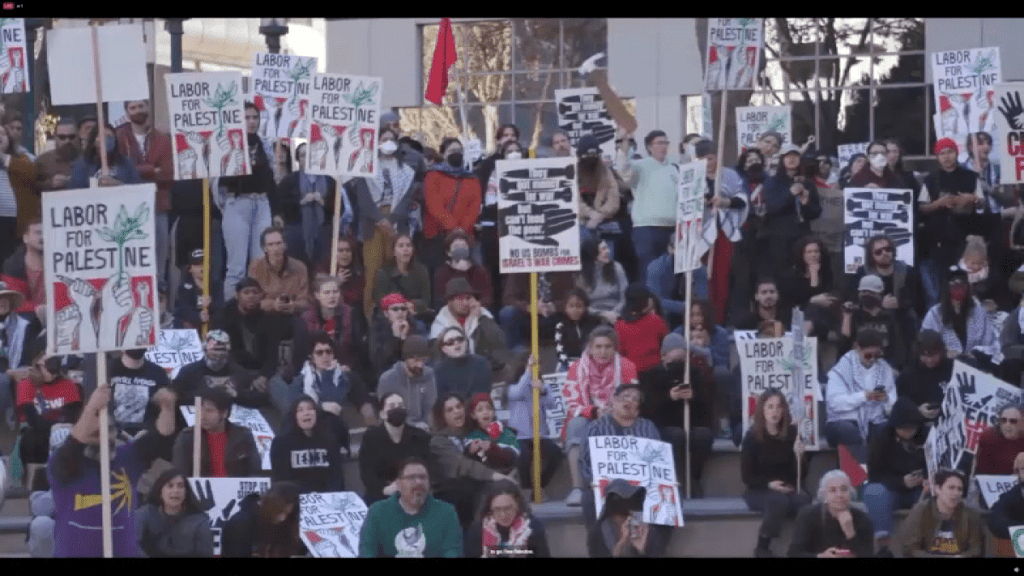
Pro-Palestine “Block the Boat” actions, where dockworkers block the transport of arms to Israel, have proliferated in recent years. Recalling actions against apartheid South Africa, they’re an effective way for labor to oppose Israel’s war on Gaza.
PRESENTATION
As a humanitarian disaster ravages Gaza, activists around the world have taken a wide range of actions aimed at pressuring Israel, from mass marches and “die-ins” to blockades and sit-ins. Unions have also ramped up solidarity actions in a range of sectors.
Among the most celebrated labor actions have been those launched by dockworkers in a number of countries — including the United States, Australia, Canada, Sweden, Italy, South Africa, Belgium, and Tunisia — who have refused to load Israeli ships and cargo and transport arms to Israel. In the United States, major actions took place in 2014 and 2021 under the banner of “Block the Boat,” organized by the San Francisco-based Arab Resource and Organizing Center.
Katy Fox-Hodess and Rafeef Ziadah have been researching port-based pro-Palestine actions since 2019. In this interview, conducted by labor historian Peter Cole, they discuss the key lessons for pro-Palestine organizers seeking to work alongside and within the trade union movement (you can find information on both here and here). Understanding these lessons is particularly important given the severity of the crisis in Gaza and Palestinian trade unions’ recent call to workers around the world to prevent the manufacture and transportation of arms to Israel.

PETER COLE
Why did you decide to study the “Block the Boat” (BTB) protests? Why were they significant, and what were you interested in understanding?
RAFEEF ZIADAH
The “official” initiation of the Block the Boat campaign dates to 2014 in the Port of Oakland, drawing inspiration from earlier similar actions in South Africa and Sweden. During Israel’s military assault on Gaza in 2008–09, the [Boycott Divestment Sanctions, or BDS] movement urged dockworkers to abstain from handling Israeli cargo and ships. In response, the South African Transport and Allied Workers Union (SATAWU) in Durban became the first in the world to refuse unloading an Israeli ship.
The Block the Boat initiative, spearheaded by the San Francisco–based Arab Resource and Organizing Center (AROC) in 2014, went beyond symbolic protest and aimed to inflict tangible economic losses on Israel. Focusing on garnering support from unionized dockworkers in the United States, the targeted effort aimed to prevent Zim Integrated Shipping Services (ZIM), an Israeli shipping company, from docking at ports. In 2014, BTB actions caused various delays to ZIM vessels and led to it discontinuing its West Coast service for several years. However, in 2021, ZIM resumed operations on the US West Coast by initiating a new express liner from China.
BTB was from the beginning pivotal in reimagining the potential for rank-and-file organizing within dockworker unions and worker-to-worker solidarity.
PETER COLE
Can you talk through what Block the Boat looked like in practice? How did the blockades actually work?
KATY FOX-HODESS
Solidarity actions at ports have looked different in different countries, and that largely reflects differences in labor law. In Sweden, for example, unlike in the United States, political strikes are lawful, so back in 2010, the national leadership of the independent Swedish Dockworkers Union simply made a decision not to handle Israeli cargo in response to an attack on Gaza. This earlier action was one of the inspirations for the Block the Boat movement in the United States.
Because of the far more restrictive laws on industrial action in the United States, however, community-based activists have played a much bigger role in the US blockades.
In each of the cases we studied (at the ports of Oakland, Seattle, Long Beach, and Port Elizabeth in New Jersey), hundreds or even thousands of community activists gathered to form “community picket lines” calling on unionized dockworkers not to enter the terminals and work ZIM vessels.
In one of the actions in Oakland, where community activists built the strongest relationship with the union, the International Longshore and Warehouse Union (ILWU) invoked the “health and safety” clause in their contract to argue that it would not be safe for their members to try to enter the workplace. An independent arbitrator was called out and ruled in the union’s favor.
Even in cases where contract clauses were not invoked, the West Coast actions showed that blockades can be at least somewhat effective in the short term when community members are able to mass in sufficient numbers to physically block entrances to the workplace.
However, it’s important to note that when this is done without support from the union, it can undermine efforts to build strong and enduring coalitions that make future action possible.
For this reason, workers in Palestine urge community-based activists to take action when they have thought through and built strong relationships with the unions at the worksite. Ultimately, these actions are strongest when the workers on site refuse to handle the ships.
PETER COLE
My book Dockworker Power examined how San Francisco Bay Area longshore workers refused to unload cargo from South Africa to protest apartheid, and that, too, was part of a global movement to isolate the white supremacist regime there. Katy, could you provide context for the Block the Boat actions in the United States and internationally?
KATY FOX-HODESS
The sustained campaign of action by dockworkers and other trade unionists against apartheid in South Africa has probably been the most significant in scale and impact. There are clear connections between South African apartheid and the situation in Palestine, and the ramping up of international trade union actions in recent years is in part a recognition of this and the need for a globally coordinated worker response.
This is particularly significant in the United States, because until very recently there has been a strong consensus in the labor movement — at least at the top — in terms of uncritical and total support for Israel. Over the past ten years or so, however, this consensus has started to break down, almost entirely as a result of grassroots initiatives by union members in solidarity with Palestinian workers, including boycott and divestment campaigns, as well as direct actions like Block the Boat.
This has really ramped up since last month to the point where, for the first time ever, we’re seeing a quite mainstream national union in the United States, the American Postal Workers Union (APWU), putting out a strong statement calling for a cease-fire.
All of this is to say that, due to the rapidly changing tide of public opinion in the United States, including in the labor movement, there has never been a better time for us to work with, and within, unions to build solidarity with Palestine.
Currently, dockworkers from Barcelona are refusing to handle military cargo (a long-standing policy of their comrades at the Port of Genoa in Italy) — as are transport workers in Belgium..
In the past month Palestinian trade unions have issued an important call for actions that disrupt the arms trade with Israel. An important tool kit, “Who Arms Israel,” provides information on how to take such actions and on manufacturing and transport. For example, last month, four hundred trade unionists in the UK successfully blockaded a weapons manufacturing plant in Kent.
PETER COLE
The three of us have conducted a lot of research on the role that workers in the maritime industry can impact global politics, which makes sense since 90 percent of all goods are moved, for at least part of their journey, by ship. However, workers in other segments of the transportation industry have tremendous potential, too. Perhaps you two could discuss examples of other industries where workers have flexed their muscles?
KATY FOX-HODESS
Yes, this is a really important point to get across. Clearly the arms industry — and the international shipping industry that transports those arms — are critical targets for direct action, and Palestinian trade unions have called for solidarity actions targeting these industries in particular. But trade unionists in other industries shouldn’t feel that this means they don’t have an important role to play as well. As the info sheet for trade unionists on building solidarity actions in their own unions explains, the best actions are those that make a direct connection between workers in a given industry.
For example, if you’re a medical worker, you could push your trade union to initiate a political campaign to open the borders of Gaza for medical personnel to enter and patients to leave. The National Writers Union has called attention both to the appalling treatment of Palestinian journalists and the need for responsible reporting on Gaza abroad. Academic and cultural workers have organized campaigns in support of the academic and cultural boycott. And trade unionists in many countries have initiated divestment campaigns when they have found that their pensions are invested in companies on the boycott list.
Every action, no matter how small, makes a difference.
– – – – –
CONTRIBUTORS
Rafeef Ziadah is a human rights activist and senior lecturer in politics and public policy (emerging economies) at King’s College London.
Katy Fox-Hodess is a lecturer in employment relations at the University of Sheffield.
Peter Cole is a professor of history at Western Illinois University and a research associate in the Society, Work and Development Institute at the University of the Witwatersrand in South Africa. He is the author or editor of several books, most recently Ben Fletcher: The Life & Times of a Black Wobbly. He is the founder and codirector of the Chicago Race Riot of 1919 Commemoration Project.
 Socialist Organizer